|
|
Home > Dallin Images Index > Parent Image
|
||||
|
||||
|
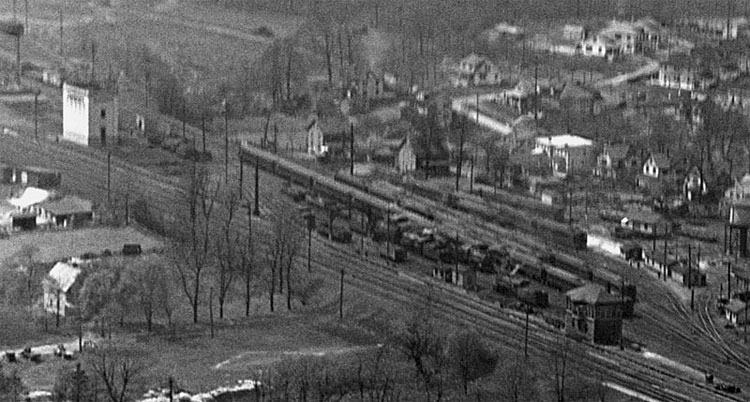
Changing Engines in Paoli Beginning in April 1935, not only did these trains, emblematic of the comfort and luxury of long distance rail travel, stop at Paoli; they waited there for five to ten minutes while crews would uncouple the giant electric GG-1 engines from the westbound trains, switch it into the yards, and replace it with the K-4 Pacific-type steam locomotive for the balance of the trip (and vice versa for the trains going east to New York). The yards in Paoli were also equipped to service the locomotives when they were not in use. By January 1937, work to extend the electrification on to Harrisburg was authorized, and a year later the main line between Paoli and Harrisburg was ready for electric trains for both passenger and freight service. With the extension of the electrification to Harrisburg it was, of course, no longer necessary to change the engines on the through trains at Paoli, as the electric locomotives were now used for the full distance between New York and Harrisburg. But Paoli remained a regular scheduled stop of the through trains for as long as they continued to run. In 1967 the Pennsylvania Railroad discontinued the entirely first-class Broadway Limited to Chicago, the last all-sleeper train in the country. When Amtrak discontinued the service entirely in 1995, the train was run with coach and sleeper cars, but would always stop in Paoli. |
||||
|
Page last updated: 2009-01-15 at 22:20 EST |